CHI 2026

Pringles, Prangles, or Prongles? Negotiating Creative Authorship in Children's Remix Practices

Role

Co-author

Authors

Michele Newman, Daeun Yoo, Runhua Zhao, Emily Tuy, Hannah Yi, Darae Kim, Jin Ha Lee, Jason Yip

Read the paper
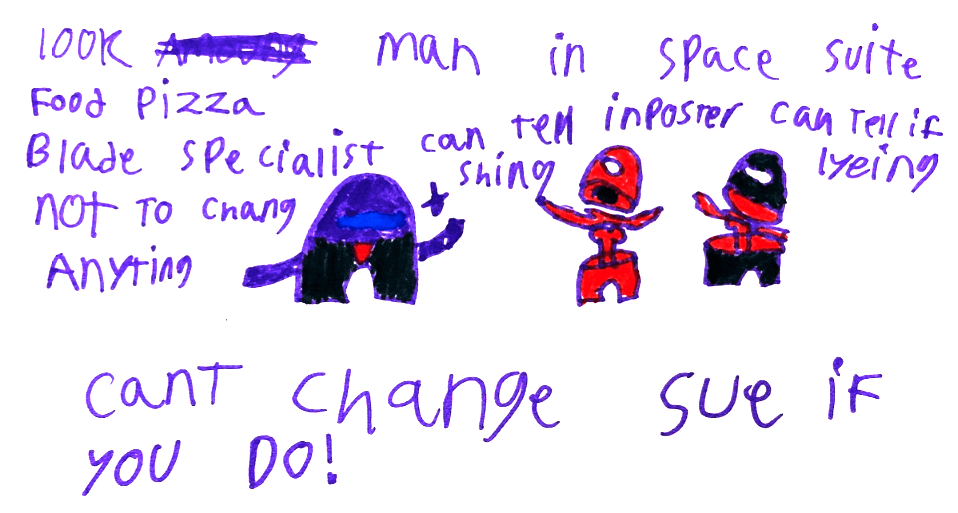
A child's marker drawing of remixed video game characters, annotated with handwritten rules for reuse
Jerold's character illustration from Design Session 4, annotated with his own guidelines for potential reuse.

Overview

Remix is how children create today: reusing, recombining, and reinterpreting existing cultural artifacts with digital tools. But the implications of remix for authorship remain largely unexamined — what does ownership mean to a child whose creation started as someone else's drawing, song, or meme?

We conducted six participatory design sessions with 16 children ages 5–11, moving from physical collage remixing to digital tools, to trace how children develop their understanding of authorship and creativity — and how the medium itself shapes those beliefs.
6

design sessions

16

child co-designers

3 mo

study duration

Method

Six 90-minute Cooperative Inquiry design sessions over three months (February–April 2025), each combining snack time, circle time, group design, and discussion.

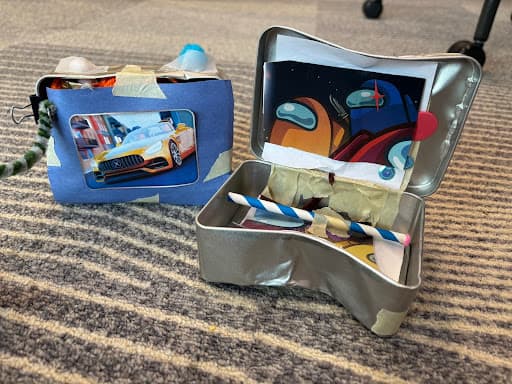
A handmade 'Portable Remixer' prototype built from decorated tins, tape, and paper by children
Jerold and Duncan's 'Portable Remixer' design from Design Session 5.
01

From physical to digital

Early sessions explored remix with physical media (layered collage on paper); later sessions moved to digital remixing and the design of creativity-support tools, letting us compare how each medium shaped children's reasoning.

02

Authorship and ethics by design

Final sessions had children design their own remix tools — like a 'Portable Remixer' — surfacing what permission, credit, and control should look like from a child's perspective.

Findings

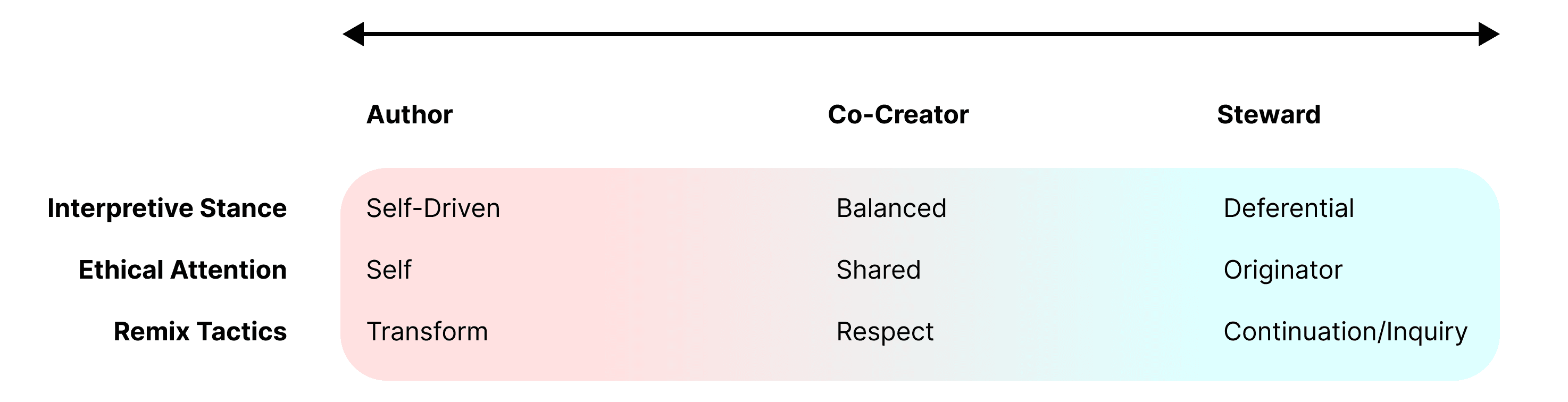
Children treated remixing as a negotiated, interpretive process — not copying. Three threads ran through their practices:

A spectrum diagram spanning Author, Co-Creator, and Steward, mapping interpretive stance, ethical attention, and remix tactics
Children's interpretive stances in remix span a spectrum from self-driven author to deferential steward.
01

Authorship as interpretation

Children remixed with three interpretive priorities — personal expression, respect for the original creator, and communication — making remix a site of ethical reasoning, not just production.

02

Authorship as mediation

The medium changed the experience of ownership: digital media's easy copying and permanence made creative acts feel more visible and consequential than physical collage, and software norms carried their own assumptions about creativity and control.

03

Authorship as ownership

Children voiced strong beliefs about permission — 'you should ask the person who created it' — yet their actual practices diverged, revealing a tension between stated values and what tools make easy.

Contribution

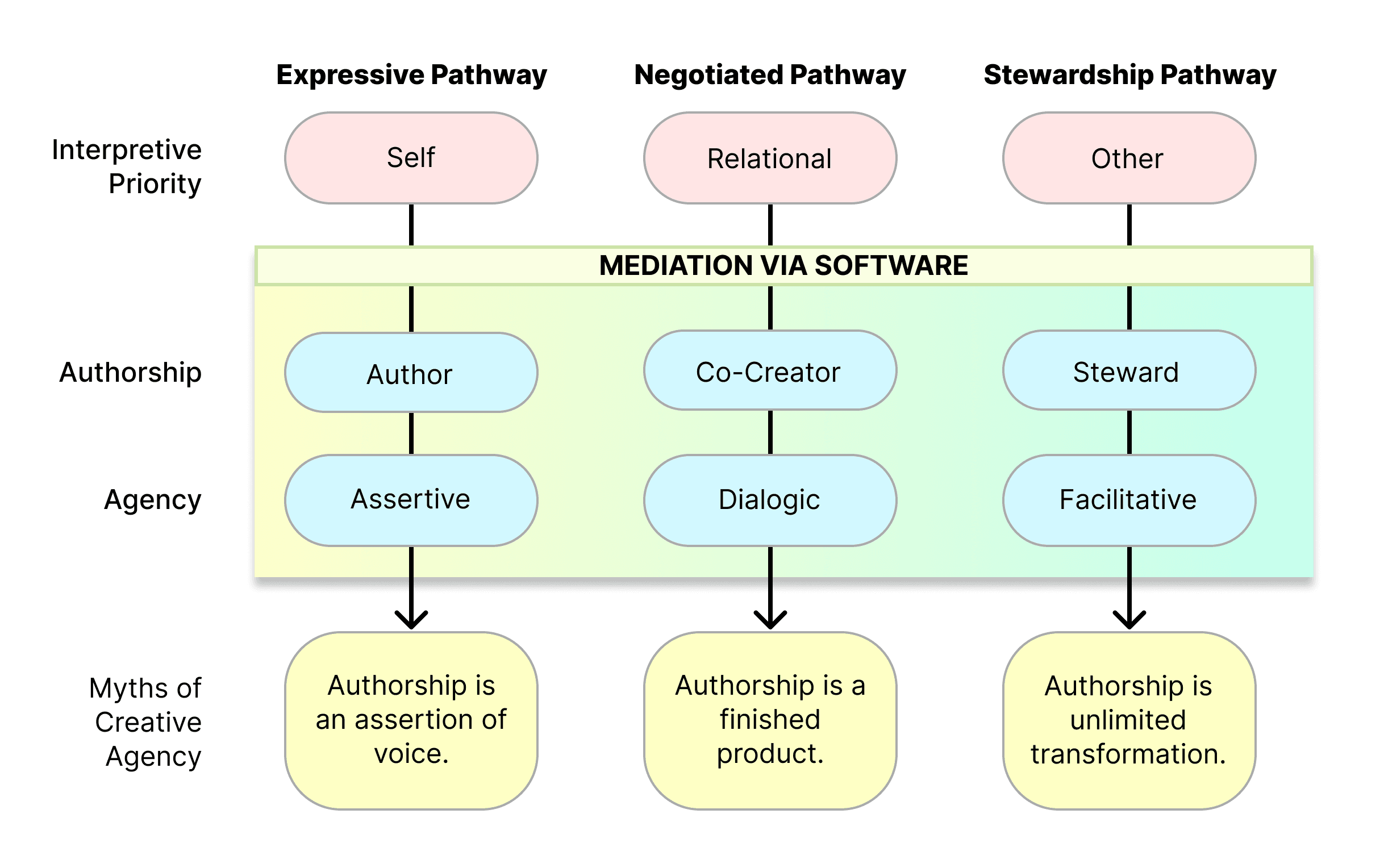
We introduce the Creative Agency Framework: three pathways tracing how remix agency emerges through interpretation and mediation.

The Creative Agency Framework diagram: expressive, negotiated, and stewardship pathways flowing from interpretive priority through software mediation to myths of creative agency
The Creative Agency Framework — three pathways from interpretive priority, through software mediation, to myths of creative agency.
01

Three pathways of creative agency

Each pathway pairs a form of agency with an authorship concept — assertive agency with the author, dialogic agency with the co-creator, and facilitative agency with the steward — along with the 'myths' about creativity that software makes feel natural.

02

Rebalancing creativity support

Most creativity-support tools privilege the expressive, sole-author pathway. We argue for tools that also recognize negotiated and stewardship forms of creativity, so children can see themselves as both creators and cultural producers.